
How does the Canadian education system work for independent schools? Learn about accreditation and provincial rules, graduation differences, funding, and more.
One country, 13 education systems, and no single set of rules for independent schools.
From curriculum and funding to graduation requirements and accreditation, here are five not-so-obvious facts that help explain how the Canadian school system works, and how independent K–12 schools fit into it.
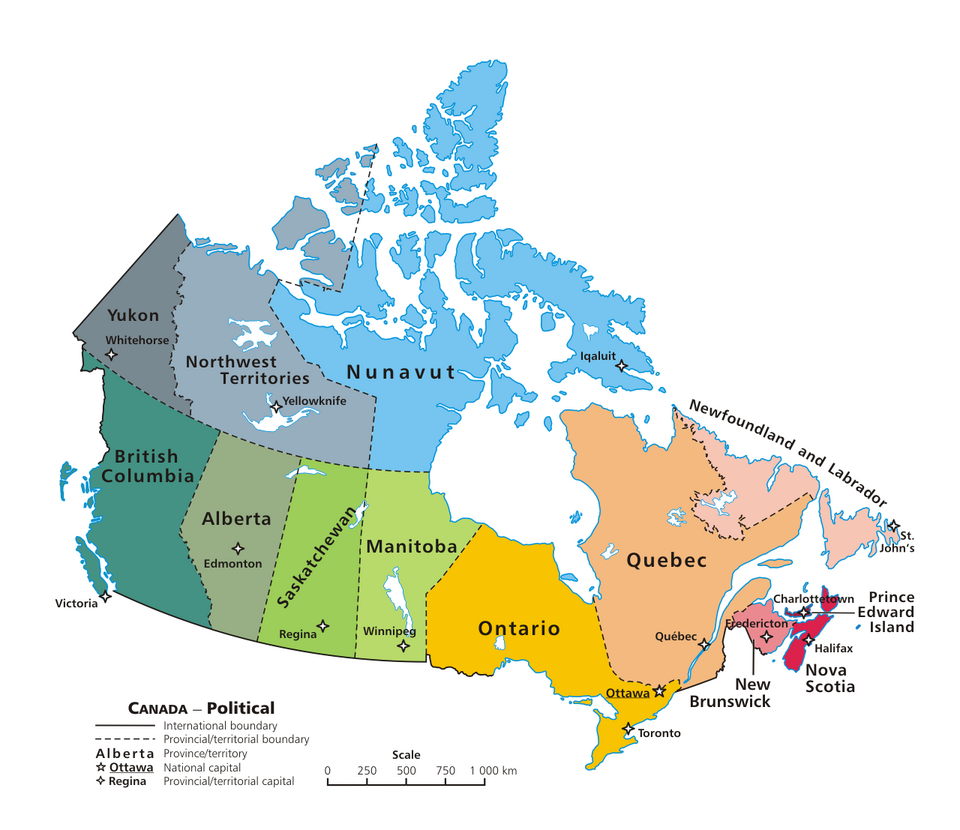
Fact 1: Education is governed by provinces and territories
Canada has no federal ministry of education and no national K–12 curriculum.
This goes back to the country's founding, when provinces were given control over education, partly to protect their different religious and educational traditions.
The provinces and territories do work together through the Council of Ministers of Education, Canada (CMEC), but it has no constitutional authority to pass laws. That is up to provincial and territorial governments, who set their own standards and rules on how schools should run.
As a result, regulations can vary considerably from one province or territory to another.
Take curriculum requirements for independent schools, for example.
In Ontario, private elementary schools have considerable freedom to develop their own educational programs without having to follow the provincial curriculum.
In British Columbia, on the other hand, independent schools might be obligated to meet the province’s general curriculum requirements and educational standards, depending on which classification group they fall in.
Source: Wikipedia
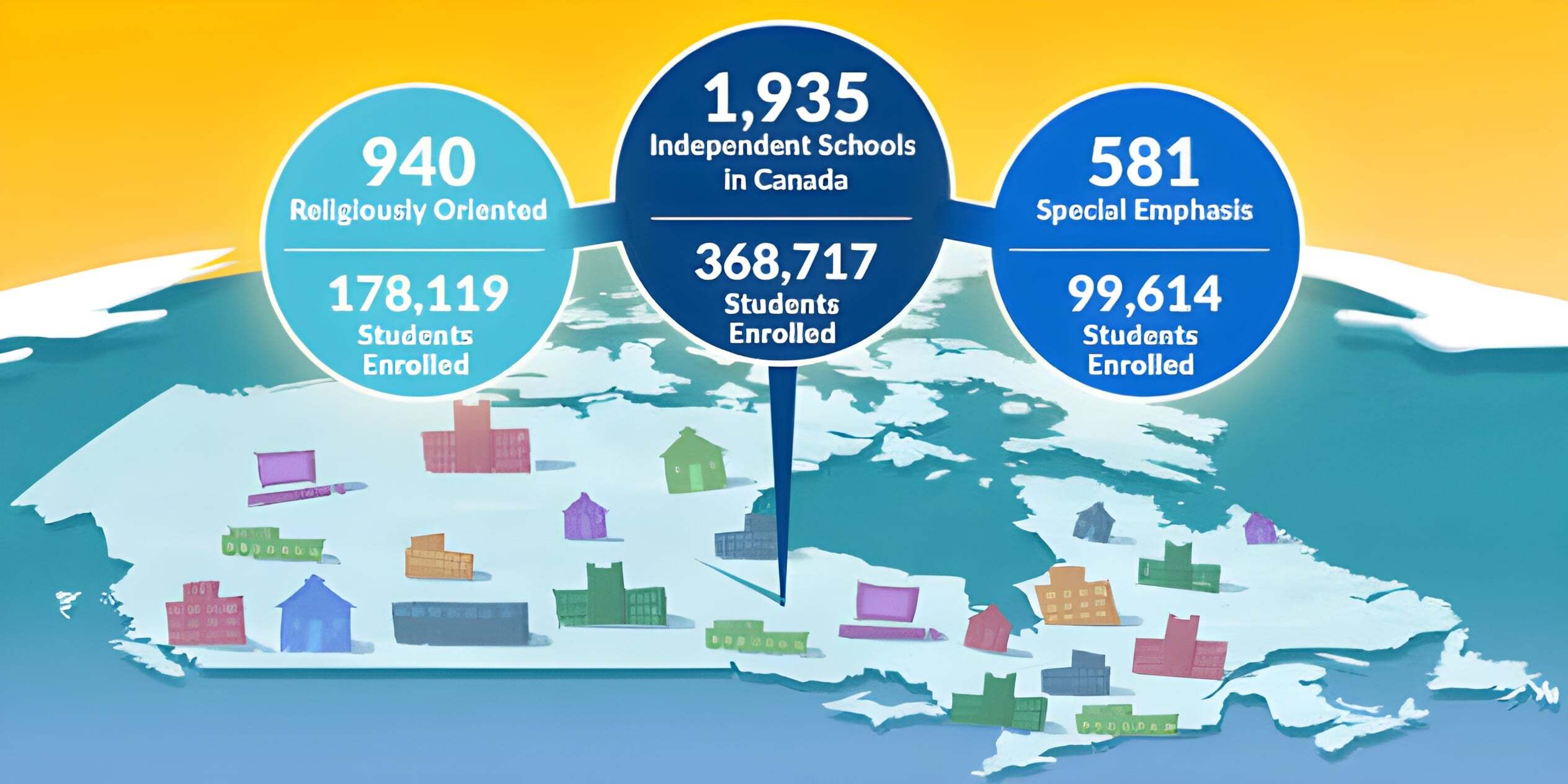
Fact 2: Independent schools don't follow one educational model
Part of what defines independent schools is the freedom to approach education in their own way. That means two schools can both be classified as independent and have very little in common.
One might follow Montessori principles and teach children in mixed-age groups, while another offers a traditional academic program with boarding facilities. Some are co-educational, others teach only girls or boys.
Some don't even have traditional classrooms, like in the SelfDesign Learning Community in British Columbia. It's an independent K–12 online school where students learn online, at home or within their community. Rather than following a conventional classroom timetable, students work with B.C.-certified educators to develop individual learning plans based on their interests, with regular check-ins to track progress.
But that's just how SelfDesign does things. In BC alone, there are also independent religious and faith-based schools, schools following alternative teaching philosophies, like Sunrise Waldorf School, or schools devoted to supporting students with learning disabilities, like Fraser Academy.
This goes to show that there are almost as many approaches as there are independent schools themselves.
Source: Fraser Institute 2016
Fact 3: Independent-school funding varies by province
Just as there’s no single body regulating education across Canada, there’s no uniform national funding model. In fact, it’s one of the areas where provincial policy can make a substantial difference.
Of Canada's ten provinces, only five provide government funding to eligible independent schools: British Columbia, Alberta, Saskatchewan, Manitoba, and Quebec. The other five, including Ontario, provide no regular operating funding at all.
But even among the provinces that do offer funding, how much schools can receive, as well as what they have to do to be eligible, can vary a lot.
For example, in B.C., independent schools can receive 35% or 50% of their local public school district's per-student operating grant, depending on their classification. But to qualify, they must be run by a non-profit organisation, employ B.C.-certified teachers, and meet provincial curriculum and educational requirements.

Fact 4: There is no single Canadian high school diploma
You might expect students across Canada to graduate with the same high school diploma, but, as with most things in the Canadian education system, it depends on the province.
In Ontario, students work towards the Ontario Secondary School Diploma (OSSD). To earn it, they need (among other things) at least 30 credits and 40 hours of community involvement.
In British Columbia, students receive the Certificate of Graduation (also known as the Dogwood Diploma). Here, the minimum is 80 credits, along with some other assessments.
30 and 80 credits might seem like quite a difference, and that's because each province has its own way of calculating them.
For independent schools offering these diplomas, the requirements are the same as for public schools, which means that course planning, graduation checks, and even how transfer students' previous credits are recognised are all province-regulated.
Fact 5: Independent-school accreditation is separate from provincial oversight
With so much depending on the province, it's easy to assume that meeting provincial requirements also means being accredited, but that's not quite how things work.
Provincial inspections check if a school meets specific government requirements. Accreditation looks at the bigger picture. It's a voluntary way for schools to demonstrate that their educational programs and day-to-day practices meet recognised standards of quality.
One of Canada's main independent-school accreditation organisations is Canadian Accredited Independent Schools (CAIS), which uses self-assessment and peer review to evaluate schools against a set of national standards.
Here's an example that makes that difference clearer: in Ontario, the Ministry of Education only conducts regular inspections of private high schools that want to grant, or already grant, credits towards the Ontario Secondary School Diploma (OSSD). Private elementary schools and high schools that don't offer OSSD credits aren't subject to these inspections, and even for schools that are inspected, that doesn't mean they're accredited.
The two processes serve different purposes, and one doesn't replace the other.
One Country, 13 School Systems
Canada may be one country, but it’s not a single school system.
Independent schools may fall under the same category, but the rules they have to follow and the things they offer can be quite different.
Understanding this puts the Canadian education system into perspective and shows just how complicated independent education can be.
How MySchool supports independent schools in Canada
MySchool supports independent K–12 schools across Canada, with particular expertise in Ontario and British Columbia. Our team helps schools prepare for provincial reporting, including OnSIS in Ontario and 1701, TRAX, and PSR in BC.
Working with schools that face the same requirements means we can share what’s worked for other teams, from catching missing student information earlier to organising who checks records before each submission.
Independent schools across Canada serve different communities and organise their work in different ways. When you choose a school management platform, you’re also choosing the people who will help make it work for your school. With MySchool, you get a dedicated Customer Success Manager who learns how your team works and helps you adapt the platform as your needs change.
Related Posts
5 Facts About the Canadian Education System School Leaders Should Know
How does the Canadian education system work for independent schools? Learn about accreditation and provincial rules, graduation differences, funding, and more.
The Student Information System Transition Calendar Most Schools Discover Too Late
A September 2027 student information system launch may feel a year away, but the decisions that shape a smooth SIS transition begin in autumn 2026. Here's a practical planning calendar to help Canadian independent schools prepare for the change.
2026/2027 School Year Calendar for Independent Schools in Canada
Bring key dates into your school’s planning with our 2026/2027 school year calendar for independent schools in Canada, covering holidays, community observances, and provincial reporting deadlines.