.png)
Board reports that take days, decisions made from memory, near misses caught by luck? Read this article to check if your school ran on heroics, instead of systems, this year.
Every school gets through the year somehow. The real question is what "somehow" really meant this year. Did a system do its job, or did a team of exhausted staff carry the school’s operations?
Most Heads of School already know the answer in their gut. The problem is that a gut feeling does not hold up in a budget meeting. It also does not tell you what to fix before September. So before the year fades into summer memory, it is worth naming the signs plainly.
Here are five that show up again and again in schools that leaned on heroics this year.
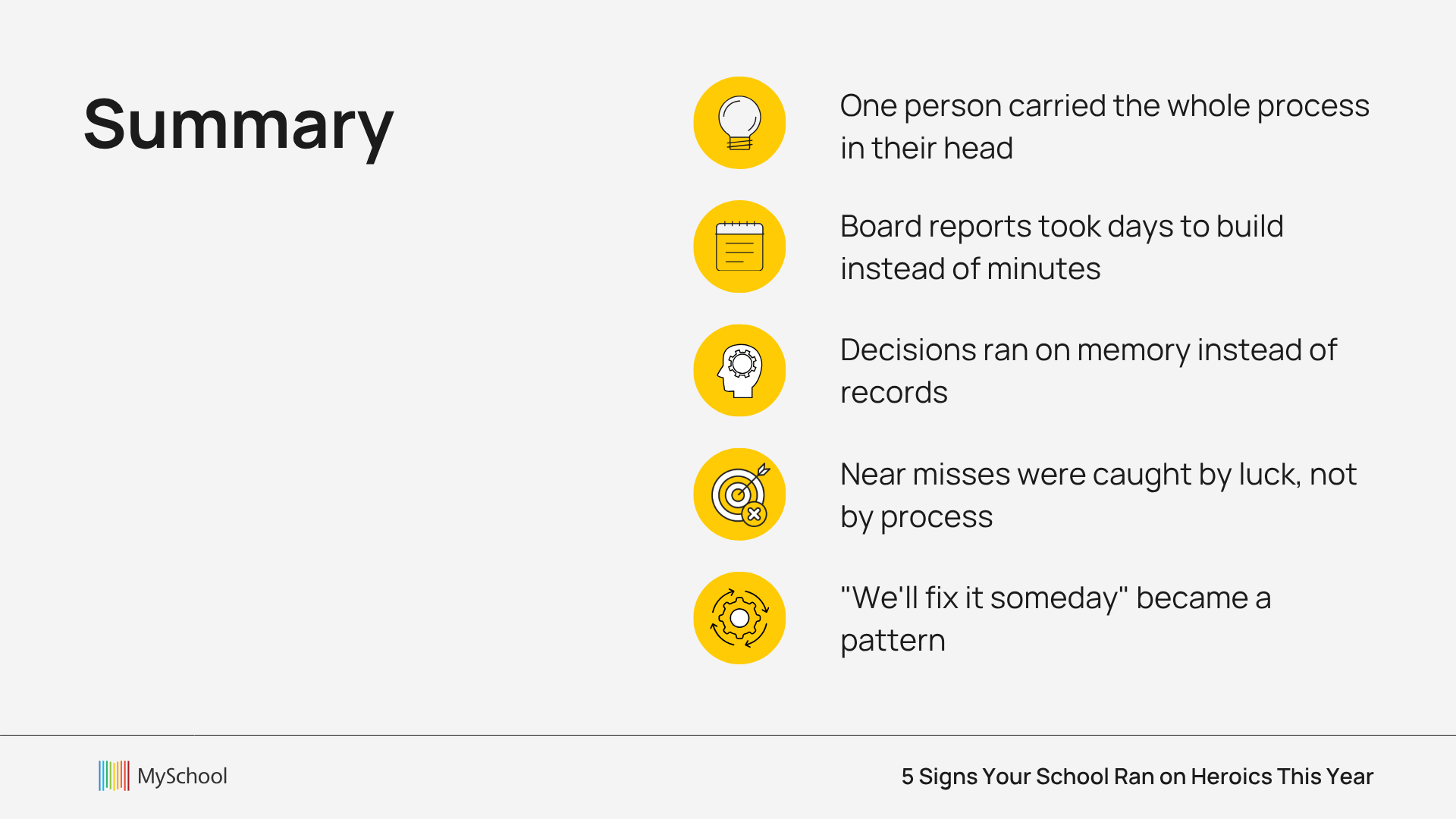
Sign #1: One Person Was the Actual System
Ask yourself who would have to answer a question at 11pm on a Sunday for the school to function on Monday. If a name comes to mind fast, that deserves a closer look. One person often ends up holding the billing quirks, the family history, and the logic that only they know. When that knowledge lives in one head, the school depends on their memory for daily operations, not on a system. But that memory does not come with a backup.
Sign #2: Board Reports Took Days To Assemble Instead of Minutes
Pulling together enrolment numbers, tuition status, or attendance trends should not require stitching together several spreadsheets and a few emails to confirm the figures. If it does, that points to a gap in your data setup, not a busy season. A well-built system produces a clean answer on demand. When every report needs a manual reconciliation first, the document your board reads is not a report. It is a reconstruction, built under deadline pressure.
Sign #3: Decisions Got Made From Memory Rather Than From Records
Think back to admissions calls, re-enrolment conversations, or a tricky parent situation. Did the answer come from a system, or from someone recalling what happened last time? Institutional memory is valuable. But it works best as a backup to good records, not as a stand-in for them. When staff routinely say "I think we did this before, let me check with so-and-so," the school is relying on memory instead of a system that should already have the answer.
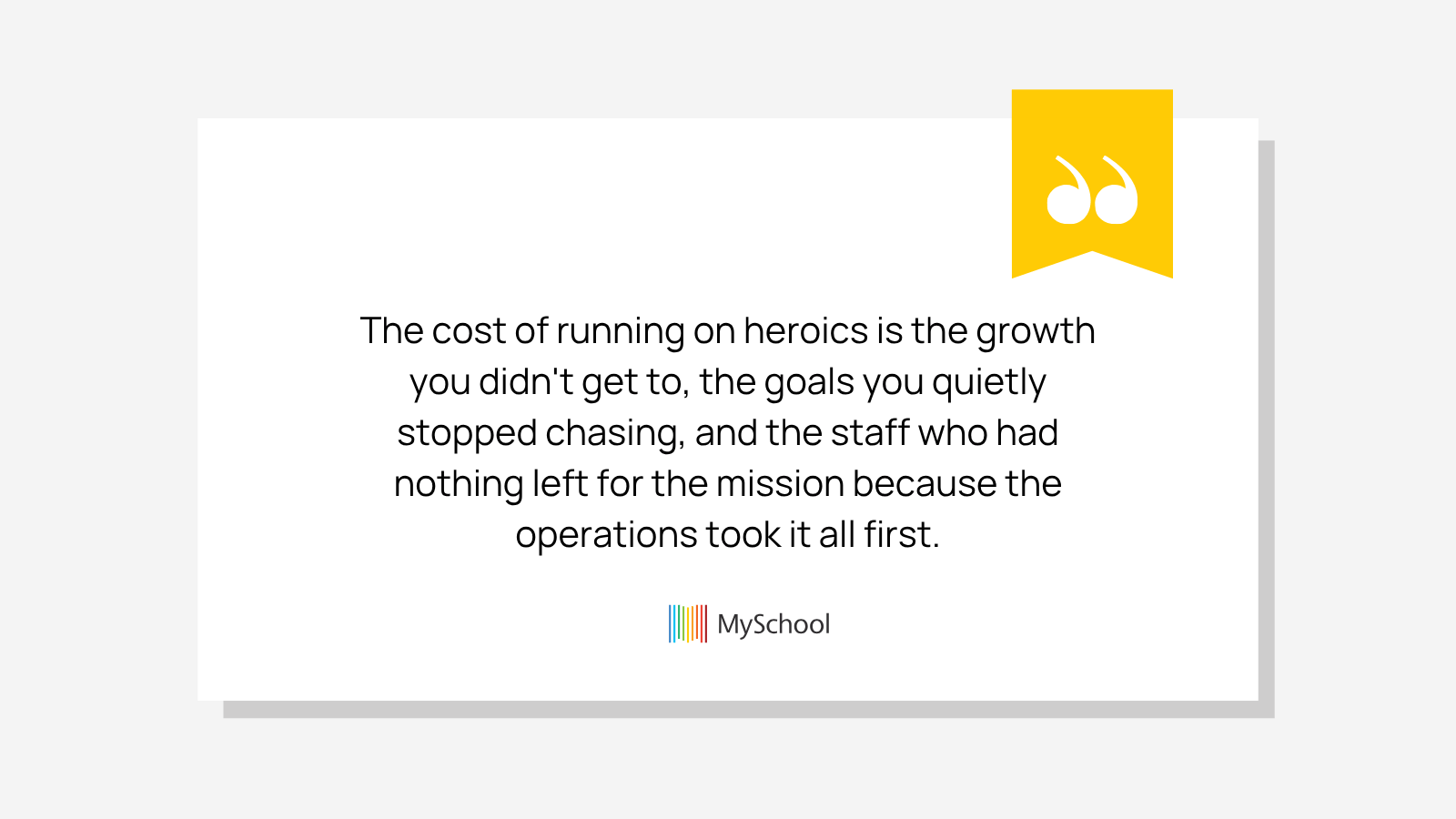
Sign #4: Something Almost Slipped Through, and It Only Didn’t Because Someone Caught It
Every school has a story from this year. Maybe a re-enrolment deadline nearly got missed. Maybe a family almost did not get a reminder they needed. These near misses feel like good catches in the moment. Looked at together, they form a pattern. A school that depends on someone noticing in time is one busy week away from the miss that does not get caught.
Sign #5: “We Will Fix That Someday” Became a Running Line
If your team said this more than once this year, pay attention to it. It usually means the fix requires touching a system, a process, or a habit that nobody had the bandwidth to change mid-year. That is understandable in the moment. But if the same workaround shows up again next year with the same promise attached, it was never a “someday” project. It quietly became a permanent patch.
What To Do Next
None of this means your team failed. It means they got the school through the year despite the systems they were working with, which is a much harder and far less sustainable way to operate. And it does not last.
This is exactly the gap MySchool is built to close. MySchool helps independent K-12 schools in Canada unify and streamline their operations by integrating SIS, admissions, tuition, communication, reporting, and LMS in one intuitive, cloud-based platform.
Even if only one of these signs showed up in your school this year, we’d be happy to talk through tightening your operations behind it.

Related Posts
Fix the Process or Replace the School Management System? How to Tell Which Problem You Have
Before you retrain the team or start shopping for new software, find out where the extra work actually begins. Learn how to test whether better ownership, training, and process design will solve the issue — or whether the limitation sits in the system itself.
School Administration Software: Tools for Independent Schools
Canadian independent school administrators juggle dozens of tasks every day. This guide highlights 11 tools that can make that work simpler, faster, and easier to manage.

The First 30 Days Back: Where School Operations Start to Crack
The first 30 days back show you how your school’s operations really hold up under pressure. This post helps you separate normal start-of-year friction from operational issues that followed you from last year.